- July 6, 2026

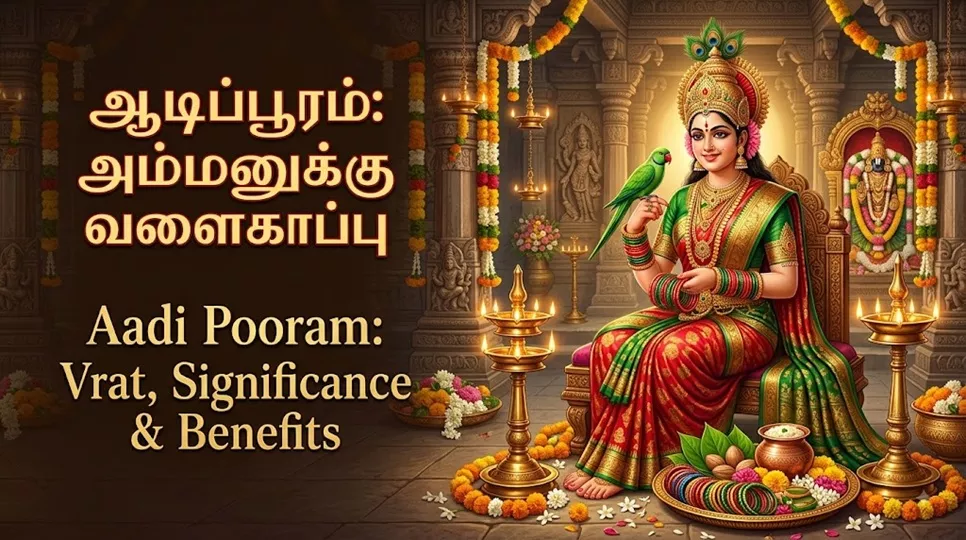
The month of Aadi is a time when festivals come alive in Goddess Amman temples. Among these celebrations, Aadi Pooram is considered one of the most auspicious days dedicated to the Goddess. Aadi Pooram is celebrated both as the festival of performing a Valaikaappu (bangle ceremony) for Akilandeshwari, the Divine Mother who protects the world, and as the sacred day on which Andal, the incarnation of Goddess Bhudevi (Mother Earth), was born.
Andal, the radiant devotee who offered garlands to Lord Ranganatha before presenting them to Him, is believed to have been born under the Pooram (Purva Phalguni) Nakshatra in the month of Aadi, near a Tulsi plant in the flower garden of Periyalvar at Srivilliputhur.
Andal later composed the Thiruppavai during the month of Margazhi and ultimately became one with Lord Ranganatha. Her birth anniversary is celebrated as the Aadi Pooram festival with great devotion and grandeur in Vaishnavite temples.
To celebrate the divine motherhood of Goddess Parvati, who is regarded as the mother of all living beings, a special Valaikaappu ceremony is performed for Amman in Shiva temples on Aadi Pooram.
On this day, thousands of colourful glass bangles are traditionally used to decorate the Amman shrine. The Goddess is adorned with bangles and worshipped with devotion.
Those who are unable to visit temples and have darshan due to large crowds can worship the Goddess at home in a simple and devotional manner.
Important Note: After the puja, it is considered highly auspicious for married women (sumangalis) and unmarried girls to wear the glass bangles offered to Amman. The bangles can also be distributed along with thamboolam (betel leaves and areca nuts) to women in the neighbourhood to seek their blessings.
Blessing of Children: It is traditionally believed that women who have been waiting for the blessing of children can perform the Valaikaappu ceremony for Amman on Aadi Pooram and wear the bangles as prasadam. According to belief, this may bless them with the joy of having children soon.
Removal of Marriage Obstacles: It is believed that unmarried women who observe the Aadi Pooram fast and worship Andal and Amman may be blessed with a good life partner.
The entire month of Aadi is filled with spiritual significance. For further reading, here are some other articles from our website:
May the grace of God and the blessings of Mother Akilandeshwari fill your homes with prosperity and happiness. May you live a life filled with abundance and well-being!